Getting your first IT job can feel confusing, especially when you see hundreds of job openings every day and don’t know where to start. Many freshers create a profile on one job portal, apply to a few jobs and then wait for a response. But finding a job becomes much easier when you use multiple methods and follow a consistent approach.
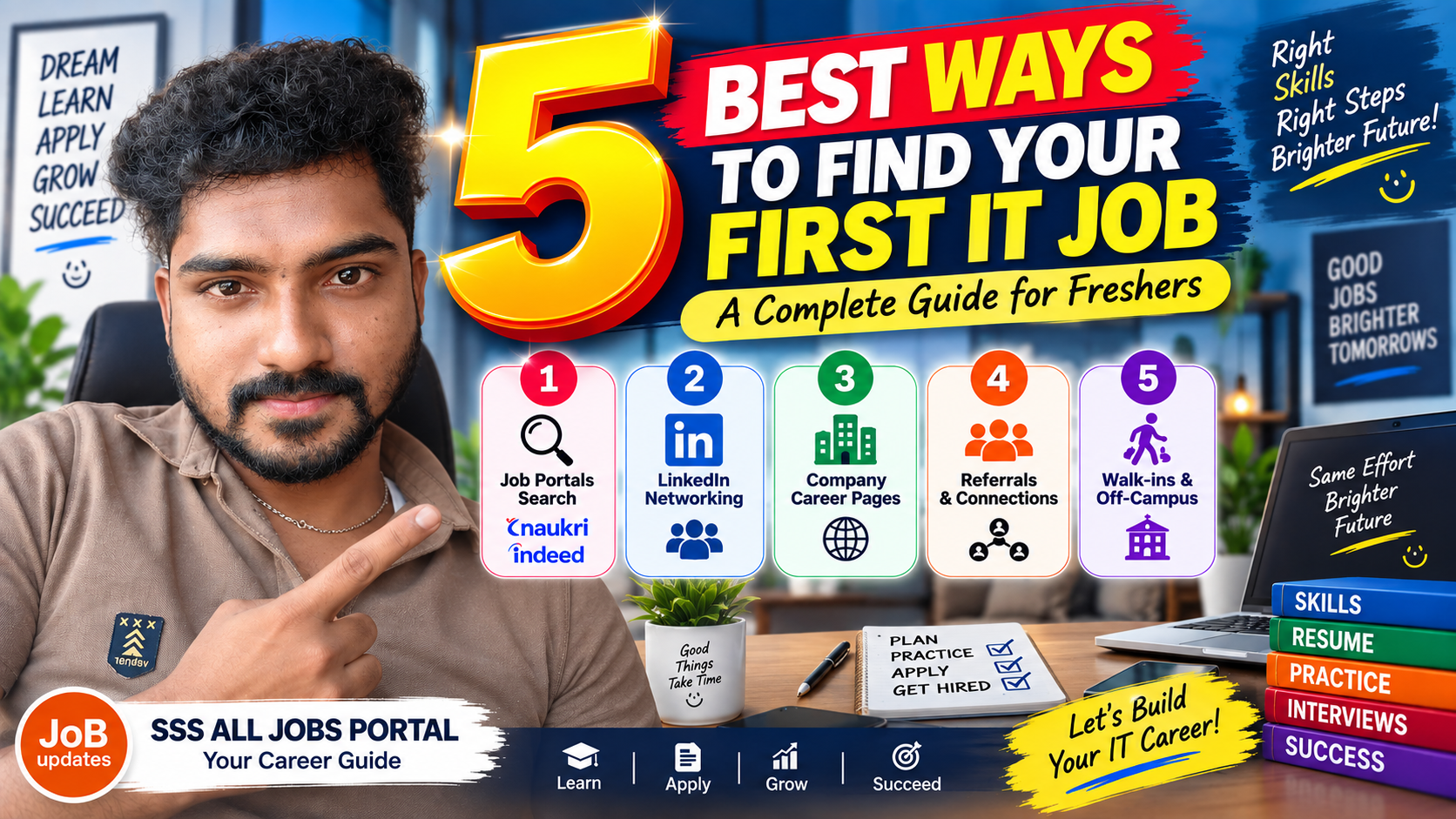
The good news is that you don’t need to search everywhere. In this guide, we will look at 5 practical ways to find IT jobs as a fresher, along with simple examples of how you can use each method effectively.
Search for Jobs on LinkedIn:

LinkedIn is not just a platform for creating a professional profile. It can also be a useful place to discover job openings, connect with recruiters and make your profile visible to companies. As a fresher, keep your profile updated with your education, technical skills, projects and the type of role you are looking for. You can also follow companies and recruiters who regularly post hiring updates and turn on job alerts for relevant positions.
For example, if you have learned C#, .NET, SQL and Web API, don’t search only for “IT Jobs.” Try specific searches such as Junior .NET Developer, .NET Developer Fresher, C# Developer, Backend Developer or Software Developer Trainee. You can also create a simple LinkedIn post saying that you are looking for entry-level opportunities. A genuine post about your skills and projects can help your connections understand what kind of opportunity you are looking for.
Example:
“I am a recent graduate interested in starting my career in software development. I have been learning C#, .NET and SQL and have worked on small projects to improve my development skills. I am currently looking for entry-level software development opportunities. If you know of any relevant openings, please feel free to reach out or share them.”
Don’t expect one post to immediately bring you a job. The idea is to build visibility over time while continuing to apply for suitable positions.
Use Naukri and Other Job Portals:
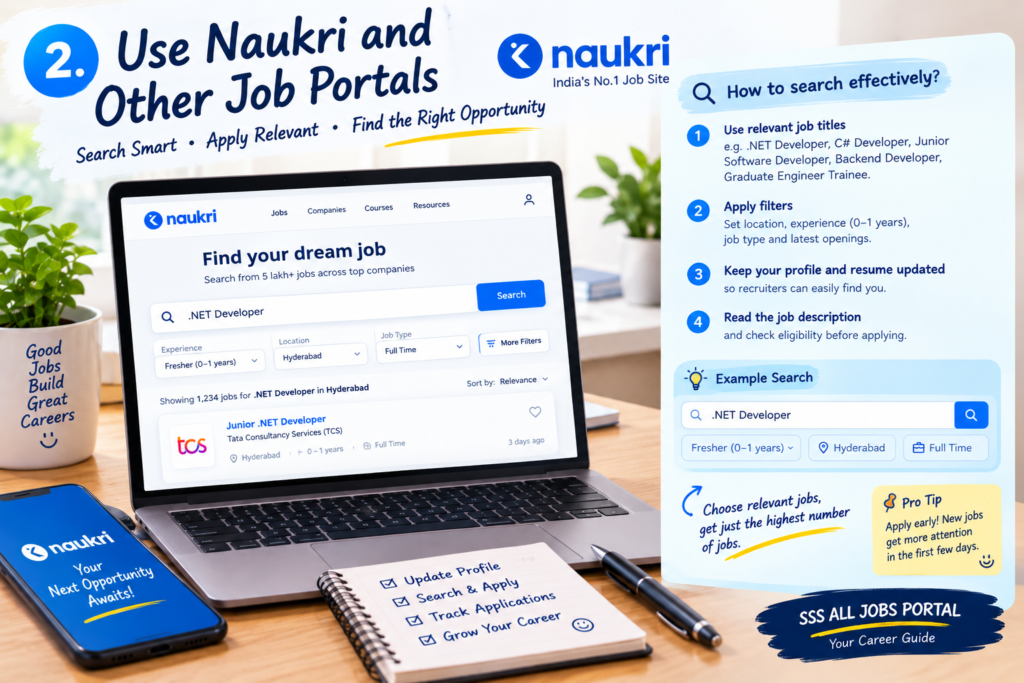
Job portals are still one of the easiest ways for freshers to discover a large number of openings. However, the important thing is how you search, not simply how many jobs you apply for. If you search for broad terms like “IT Jobs,” you may see hundreds of unrelated positions and waste time applying for roles that don’t match your skills.
Instead, search using different job titles that match the career path you want to follow. For example, a fresher interested in backend development could search for .NET Developer, C# Developer, Junior Software Developer, Backend Developer and Graduate Engineer Trainee. Use available filters such as experience, location and job freshness to narrow down the results.
You should also keep your profile and resume updated on the job portal. When you find a suitable opening, read the eligibility and job description before applying. Five relevant applications are more useful than twenty random applications because you have a better chance of matching what the employer is looking for.
Check Company Career Pages:

One method that many freshers overlook is checking the official career pages of companies directly. Companies often publish vacancies on their own websites, and some positions may not be easily discovered through every job portal.
Start by creating a list of companies you would genuinely like to work for. Visit their official careers page and search for terms such as Fresher, Graduate, Trainee, Associate, Junior Developer or Entry-Level. If the company allows job alerts, subscribe to them so you don’t have to manually check every day.
For example, suppose you want to work for a particular IT company. Instead of waiting for someone to share an opening on social media, go directly to that company’s careers page and search for suitable entry-level positions. Bookmarking the careers pages of 10–20 target companies can become a simple weekly habit.
The important point is to always verify the opportunity through the official company website before sharing personal information or attending an interview.
Use Referrals and Your Network:

A referral can help your resume reach the right team, but asking for one should be done professionally. As a fresher, your network can include college seniors, friends, former classmates, relatives working in IT and professionals you connect with on LinkedIn.
Don’t send a message like “Hi, referral please” without explaining anything. First check whether the person works at the company where you found a suitable opening. Then briefly introduce yourself, mention the role and ask politely.
Example:
“Hi Rahul, I noticed there is an opening for a Junior Software Developer in your organization. I’m a recent graduate with knowledge of C#, .NET and SQL, and I’m interested in the position. If you feel my profile is relevant, would you be comfortable referring me for the role?”
Even when someone cannot provide a referral, they may still share useful information about the hiring process or another suitable opening. So focus on building genuine professional connections, rather than contacting people only when you need a referral.
Don’t Ignore Walk-ins and Off-Campus Hiring:
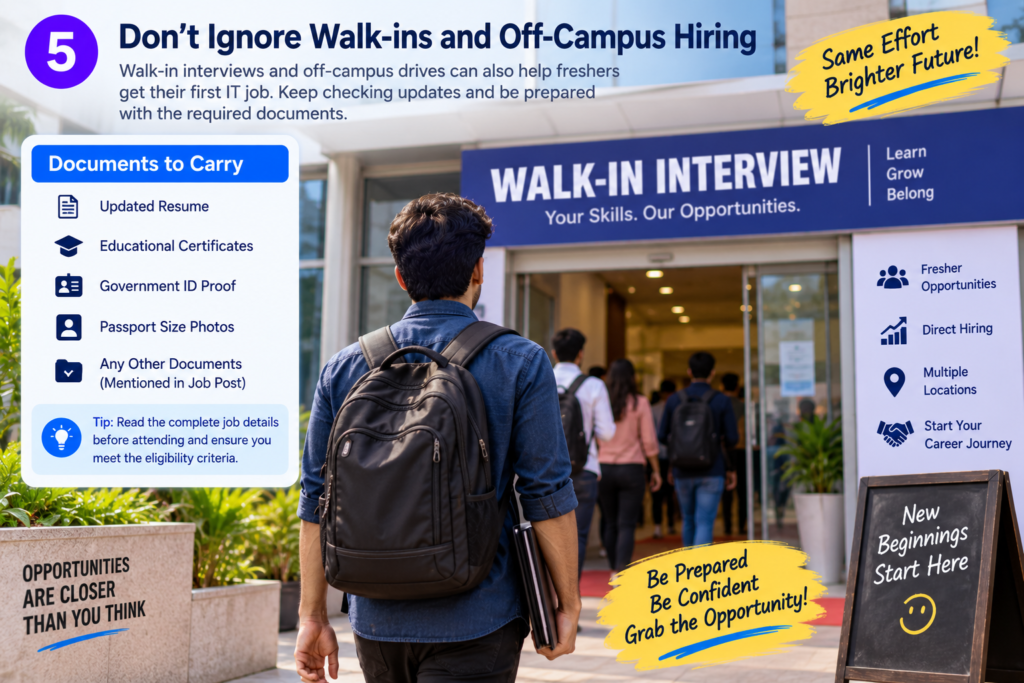
If you are a fresher, don’t depend only on campus placements. Walk-in interviews, off-campus drives, recruitment events and direct hiring campaigns can also provide opportunities to enter the IT industry.
Walk-ins can be particularly useful because the hiring process may happen faster than a normal online application. However, always read the complete job details before attending. Check the experience requirement, education, location, skills, interview date and documents required. Carry an updated resume and the documents specifically mentioned by the employer.
For example, if a company announces a walk-in for 0–1 years experience and you are a fresher who meets the stated eligibility requirements, there is no reason to ignore it simply because you don’t have previous IT experience. Similarly, keep an eye on off-campus hiring drives conducted through company websites, job portals and verified recruitment channels.
Most importantly, never pay money for a job or interview opportunity. If someone asks for registration fees, security deposits or payment in exchange for a job, verify the opportunity carefully and avoid suspicious recruitment offers.
Final Thoughts:
Finding your first IT job is not a one-day activity. You may apply to several suitable positions before receiving an interview call, and that is completely normal. Instead of depending on one website, build a simple routine using LinkedIn, job portals, company career pages, referrals and walk-in/off-campus opportunities.
At the same time, continue improving your technical skills, projects, resume and communication. Keep applying consistently, learn from every interview and stay patient. Your first IT opportunity may come from an application you submitted, a person you connected with or a job opening you discovered at the right time.
The goal is not to apply everywhere. The goal is to find the right opportunities and give yourself more chances to be noticed.
Keep learning and keep growing! For more practical IT learning guides, career tips, job search strategies and useful resources to help you build your career, keep visiting our SSS ALL JOBS PORTAL – Your Career Guide.