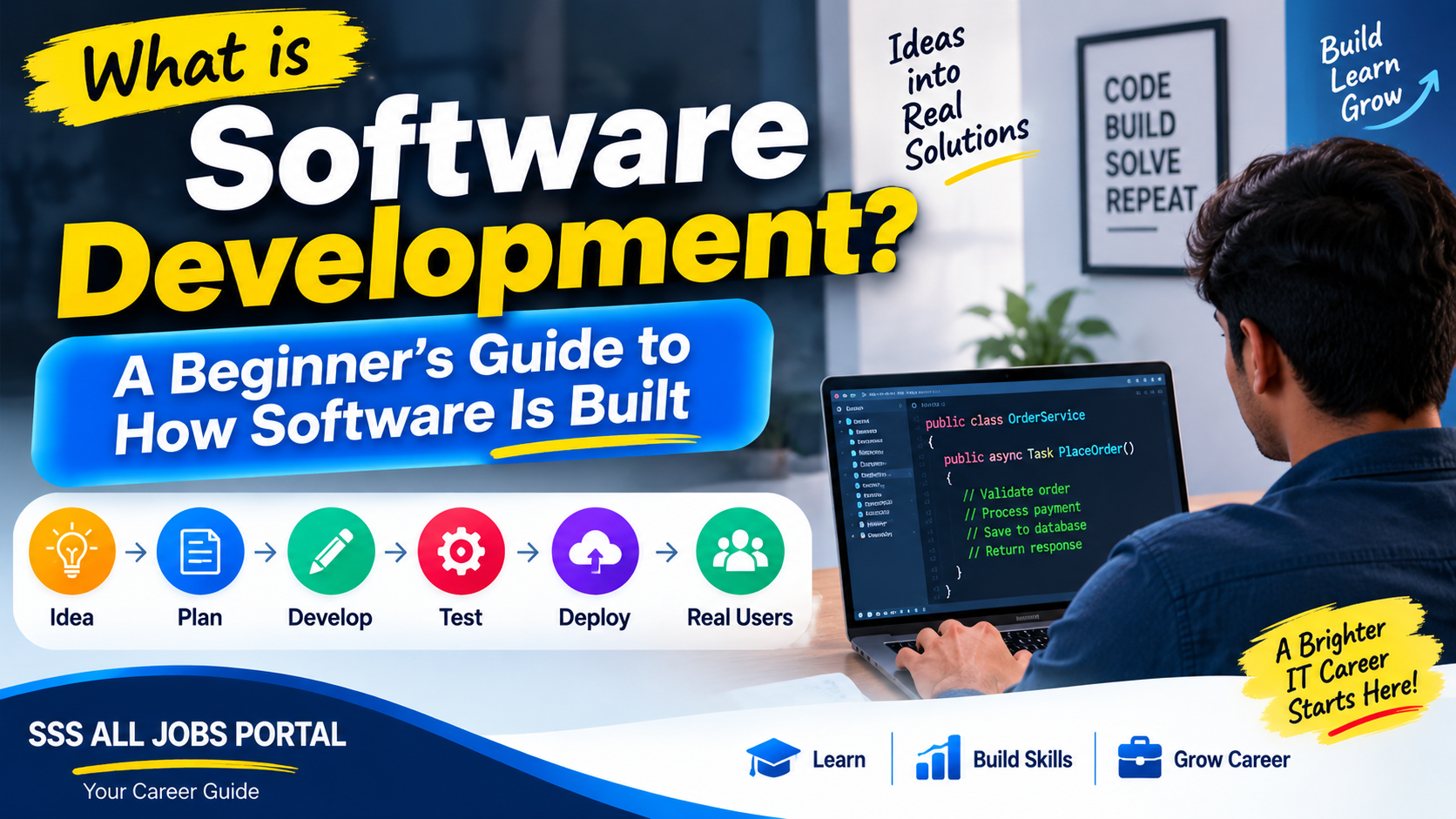
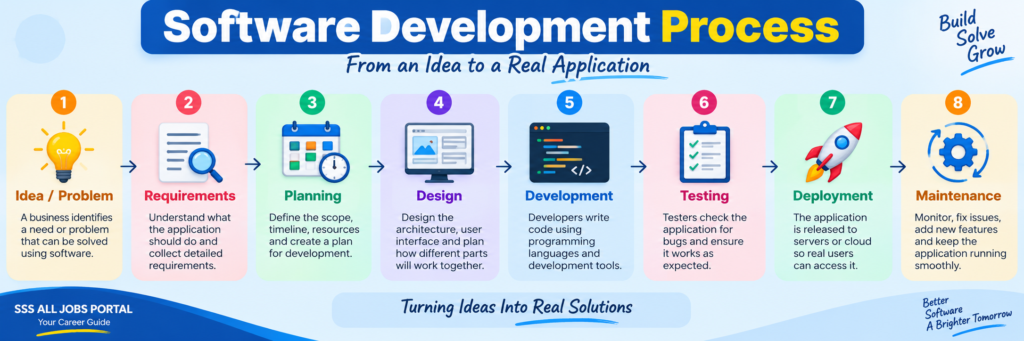
Software is everywhere around us. When you order food through an app, transfer money using a banking application, book a ticket, watch a video, or even check your email, you are using software. But have you ever wondered how these applications are actually created? A mobile app or website doesn’t appear simply because someone writes a few lines of code. Behind every useful application, there is a process involving requirements, planning, design, development, testing, deployment, and ongoing maintenance.
If you are a fresher planning to enter the IT industry, understanding this process is important. You don’t need to become an expert developer to understand it. You simply need to know how the different pieces fit together and what happens from the time someone gets an idea until the final software is used by real customers. In this article, let’s understand software development using simple English and a real-world example.
What Is Software Development?
In simple words, software development is the process of creating, improving, and maintaining software applications. Software can be a mobile application, website, banking system, business application, cloud service, or even an internal tool used by employees of a company. The development process starts with understanding a problem or requirement and continues until the software is built, tested, released, and maintained for users.
For example, imagine that a company wants to build an application where customers can order groceries from their mobile phones. Someone first needs to understand what customers should be able to do. The development team then needs to decide how the application should work, how the data will be stored, what screens are required, how different systems will communicate, and how the application will be tested. Developers write the required code, testers verify the application, and eventually the application is made available to customers.
So when someone says “I work in software development,” it doesn’t necessarily mean that person spends the entire day writing code. Coding is one important part of software development, but the complete process involves many other activities as well.
A Simple Real-Life Example
Let’s take a simple example that most people can understand: an online food delivery application.
Imagine you are a restaurant owner. You want customers to see your menu, select food items, place orders, make payments, and track their orders. You approach a software company and explain what you need. At this point, there is no application yet. There is only a business idea and a problem that needs to be solved using technology.
The software company now has to convert that idea into something that a computer or mobile phone can actually execute. The team needs to understand the requirements, decide how the application should behave, design the screens, create the backend services, connect the application to a database, test different scenarios, and finally release it to customers.
This is what makes software development interesting. A software developer is not simply converting English sentences into code. The developer is helping turn a real-world requirement into a working technical solution.
What Happens Before Coding Starts?
One of the biggest misunderstandings among beginners is thinking that developers immediately start writing code when a customer gives them an idea.
In a real project, there is usually a lot of discussion before development begins. The team needs to understand exactly what the customer wants. For our food delivery example, they might need to answer questions such as: Should customers create an account? Can they order without logging in? How should payments work? Can customers cancel an order? How will restaurants receive the order? What happens if payment succeeds but the order fails?
These questions become part of the requirements. The team then discusses the requirements and decides how the software should be designed. Depending on the project, business analysts, product owners, architects, developers, designers, testers, and other team members may be involved at different stages.
This is why communication is also an important skill in IT. A developer who understands programming but does not understand the requirement may still build the wrong solution.
Where Does Coding Come Into the Picture?
Now we reach the part most people immediately associate with software development: coding.
Once the team understands what needs to be built and has a technical plan, developers start implementing the required functionality. They use programming languages and development tools to give instructions to the computer. For example, a .NET developer may use C# and ASP.NET Core to build backend services, while another developer may use JavaScript or another technology to build parts of the user interface.
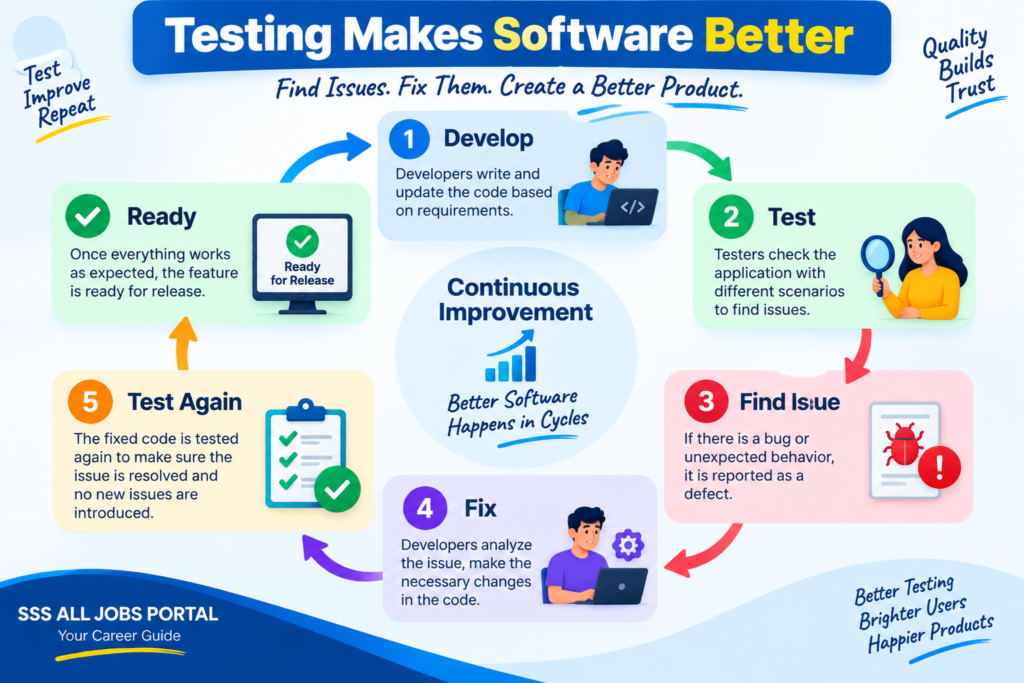
Suppose a customer clicks the “Place Order” button. The application needs to perform several actions. It may need to validate the customer’s information, check the selected products, calculate the total amount, communicate with a payment service, save the order details, and return a response to the application. The code written by developers makes these actions possible.
So coding is extremely important, but it is one part of a much larger software development process.
Why Is Testing Important?
Imagine that the development team has completed the food delivery application. Would it be a good idea to immediately give it to thousands of customers?
Probably not.
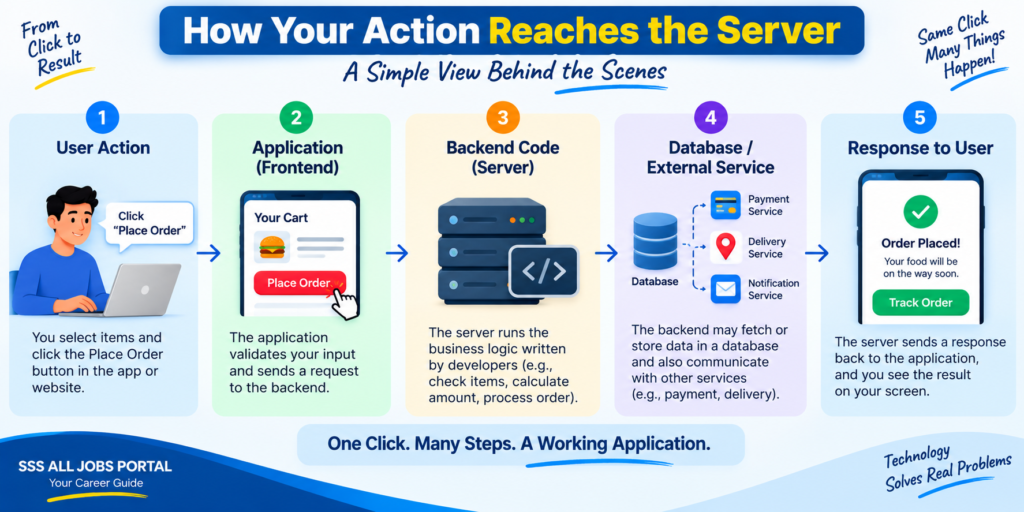
The application needs to be tested first. Testers and developers check whether different features behave as expected. They may test successful orders, failed payments, invalid addresses, cancelled orders, empty carts, incorrect login details, and many other situations. The goal is not simply to check whether the application works in one normal situation. The team also needs to understand what happens when users do something unexpected.
When a problem is discovered, it is usually reported as a bug or defect. Developers investigate the problem, make changes to the code, and the application is tested again. This process can happen multiple times before the software is considered ready for release.
Testing is therefore not something that happens only at the very end. In modern software teams, quality is considered throughout the development process.
How Does Software Reach Real Users?
After development and testing are completed, the application still needs to be made available to its users. This is where deployment comes in.
For example, if a company has developed a website, the application needs to run on servers or cloud infrastructure so customers can access it through the internet. A backend API needs to be deployed, databases need to be available, configuration needs to be set correctly, and security requirements need to be followed.
Today, many companies use cloud platforms such as Microsoft Azure, AWS, or Google Cloud to host and operate their applications. Development teams may also use CI/CD pipelines to automate parts of the process of building, testing, and deploying software.
For a beginner, you don’t need to understand all these cloud and deployment concepts immediately. The important thing to understand is this:
Writing code on a developer’s computer is not the same as making that code available to real users.
What Happens After Deployment?
A common beginner question is:
“Once the application is deployed, is the project finished?”
Not really.
Once real users start using an application, new problems and requirements can appear. Maybe users report an issue. Maybe the business wants a new feature. Maybe the application needs better performance because the number of users has increased. Sometimes a security update is required, or an external service changes the way its API works.
Developers and support teams therefore continue working on the application even after its initial release. They monitor the system, investigate production issues, fix bugs, improve performance, and implement new features.
This is why software development is an ongoing process rather than a one-time activity.
Who Works on a Software Project?
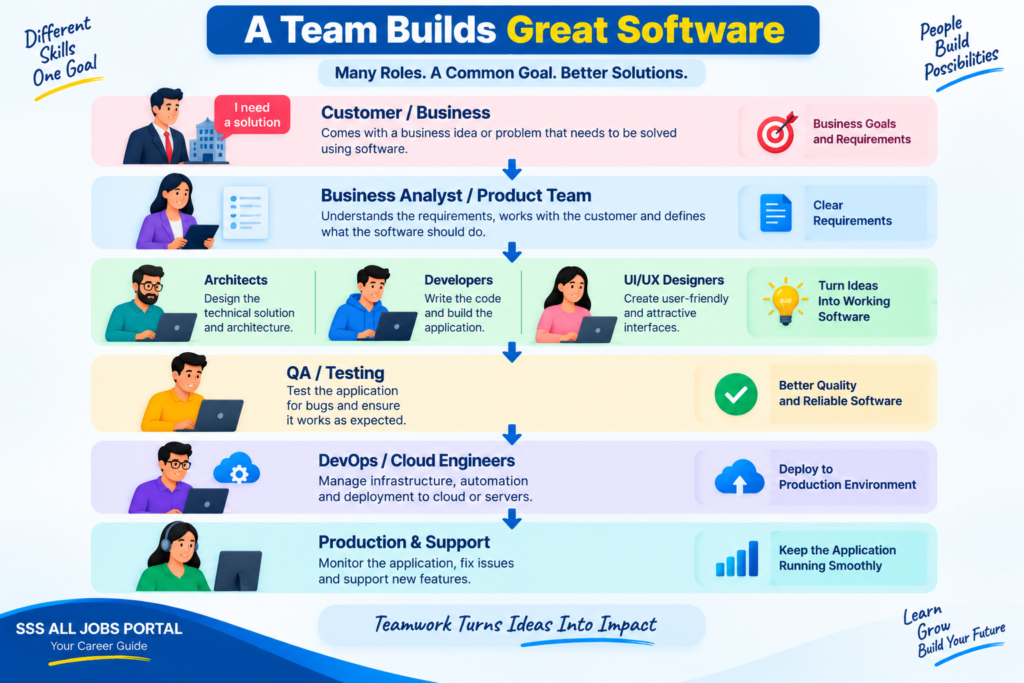
A software project can involve many different roles, and the exact team structure depends on the company and project.
A Business Analyst may help understand and document business requirements. A UI/UX Designer may work on how the application looks and how users interact with it. Developers build the software. Testers or QA Engineers verify the application. Architects may help make technical decisions, while DevOps or Cloud Engineers may work on infrastructure, automation, and deployments.
There can also be project managers, product owners, technical leads, database specialists, security teams, support teams, and many others.
Software Development Is More Than Coding
If you are planning to become a software developer, you obviously need to learn programming. But there are other skills that will become important as you grow.
You need to understand requirements, communicate with team members, use source control, read existing code, debug problems, write maintainable code, test your changes, and understand how your application behaves in different environments.
For example, imagine you join a company as a .NET developer. Your first task may not be to create an entire application from scratch. You might receive an existing API and be asked to add one new feature. Before writing anything, you may need to understand the existing code, identify the correct project or service, check the database structure, understand the requirement, make the change, test it, create a pull request, respond to code review comments, and eventually deploy the change.
That is much closer to real software development than simply solving programming questions on a website.
A Simple Software Development Journey
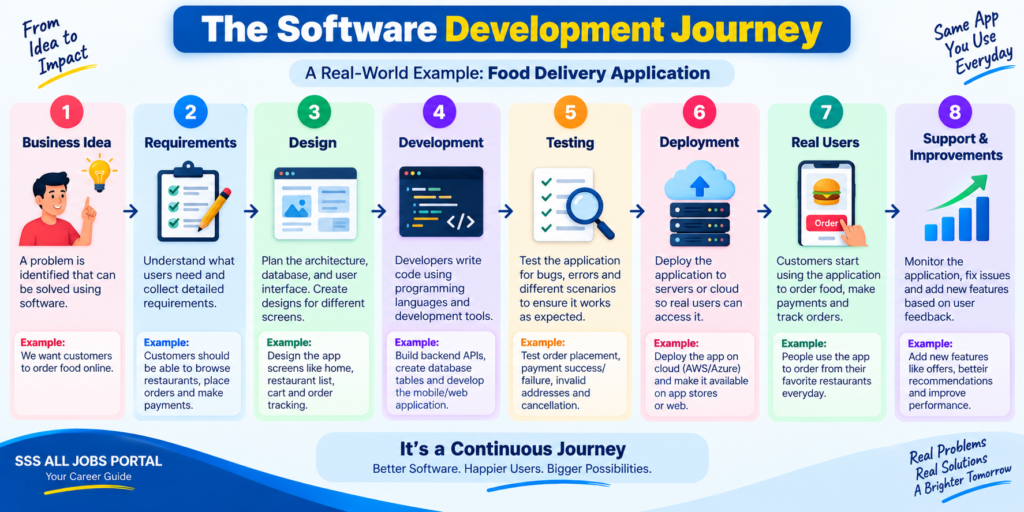
Let’s bring everything together using our food delivery application.
The business starts with an idea: “We want customers to order food online.”
The team discusses the requirement and decides what the application should do. Designers work on the user experience, developers build the application, testers verify the functionality, and the application is deployed to an environment where real users can access it.
Once customers start using it, the team monitors the application and works on improvements. New requirements may arrive, bugs may be discovered, and the cycle continues.
What Should a Fresher Learn?
If you’re reading this article because you want to enter software development, don’t feel overwhelmed by the number of technologies mentioned above.
Start with the basics.
First understand how computers, applications, databases, APIs, and programming work. Then choose one programming language and learn it properly. If you’re interested in the .NET path, for example, you could start with C#, then move into .NET, ASP.NET Core, Web API, SQL, Git, and eventually cloud technologies.
Along with technology, practice is extremely important. Build small applications, make mistakes, debug them, and try to understand why your code behaves in a particular way. You don’t need a huge project when you are starting. Even a small application can teach you how requirements become code and how different parts of an application communicate with each other.
As you progress, start learning how real development teams work. Understanding Git, pull requests, code reviews, testing, deployment, and basic cloud concepts will help you connect your programming knowledge with real-world software development.
Common Misunderstandings About Software Development
“Software developers only write code.”
Coding is an important part of development, but developers also spend time understanding requirements, debugging, reviewing code, testing, attending meetings, discussing solutions, and working with other team members.
“I need to know every technology before applying for a job.”
You don’t. Technology is too large for one person to know everything. Pick one direction, build a strong foundation, and gradually expand your skills.
“My first project must be a huge application.”
Not at all. A small project that you completely understand is much more useful than a large project that you copied from somewhere else.
“After deployment, the developer’s work is finished.”
Software usually continues to evolve after release. Developers may fix bugs, improve performance, add features, and support the application as business requirements change.
Final Thoughts
If you’re a fresher looking at software development for the first time, the entire process may seem complicated. There are programming languages, databases, APIs, testing, cloud platforms, Git, deployment and many other terms. But once you understand how these pieces connect, the picture becomes much clearer. You don’t need to learn everything at once. Start with the foundation and gradually understand how each part contributes to building a working application.
The most important thing to remember is that software development is about solving problems using technology. Coding is one of the tools developers use to solve those problems, but good software also requires planning, communication, testing, teamwork and continuous improvement. The more you understand this bigger picture, the easier it becomes to understand what developers actually do in a real IT organization.
If you’re planning to start your IT career, don’t be afraid of the technical terms you hear around you. Start with one concept, understand it properly, practice it, and then move to the next one. Over time, these small pieces will connect and you’ll begin to see software not just as lines of code, but as a complete system built to solve a real-world problem.
Your learning journey doesn’t need to happen overnight. Start with one concept today, understand it well, and keep moving forward